Our Approach

Rossbourne School offers a coherent and comprehensive curriculum that ensures a continuum of learning for each student.

Our curriculum encompasses specific learning areas and key dispositions, which are developed, practiced, and demonstrated by students and staff across all educational settings, including classrooms, co-curricular programs, families, and the wider community.

A whole-school approach to curriculum planning fosters a shared vision, common language, and aligned understanding among staff. We prioritize the quality implementation of evidence-based classroom programs and practices. Our goal is to create opportunities for students to build independence, social connections, resilience, and engage in respectful relationships. This approach nurtures student voice, agency, and engagement, which are vital for each student’s growth and potential.

Below is an overview of Rossbourne’s core subject offerings:

Social Emotional Learning (SEL)

Social Emotional Learning at Rossbourne School engages the entire school community in creating an inclusive and supportive learning environment that promotes social, emotional, and academic growth. Embedded in all aspects of our curriculum, policies, and community partnerships, SEL follows a systemic approach that integrates classroom learning with whole-school initiatives, family involvement, and broader community connections.

The SEL curriculum is shaped by three interconnected pillars: Self-Managing, Self-Monitoring, and Self-Modifying. These are grounded in evidence-based research and serve as a framework for integrating emotional, social, and academic learning. Our approach fosters deep understanding through a shared language and collaborative learning model, offering students rich opportunities to practice, apply, and evaluate their social-emotional skills in real-world contexts.

Read more

English

The English curriculum at Rossbourne School equips students with essential language skills, enabling them to communicate effectively and engage meaningfully with the world. Language is central to human experience, and our curriculum nurtures curiosity while fostering strong self-esteem and community connections.

Recognizing the evolving nature of communication in a digital world, our programs are informed by current linguistic and literacy research. Students develop skills in comprehension, communication, and multimodal writing, allowing them to navigate various contexts confidently. Cross-curricular connections enhance learning, reinforcing language acquisition across all subjects and ensuring adaptability to diverse needs.

Read more

Mathematics

Mathematics at Rossbourne is an essential learning area that develops logical reasoning, problem-solving skills, and quantitative understanding. More than just acquiring knowledge, students are encouraged to explore patterns, quantify relationships, and apply mathematical principles in everyday life.

Our curriculum emphasizes problem-solving, critical thinking, and practical applications. Students pose and investigate problems, select appropriate strategies, and communicate their understanding through logical reasoning. Encouraging curiosity, collaboration, and resilience, we help students develop mathematical.

Read more

Adolescent Health & Physical Education

In Adolescent Health and Physical Education, students build confidence, develop movement skills, and foster respectful relationships. The curriculum is shaped by a strength-based approach, recognizing and nurturing each student’s abilities.

Our dynamic learning model integrates health, wellbeing, and movement education. Flexible group structures and developmentally appropriate learning experiences ensure all students receive tailored instruction. Cross-curricular connections enhance the depth and application of learning, helping students generalize their knowledge across multiple settings.

Read more

Information Communication Technology

Digital Technologies shape how we communicate, solve problems, and interact with the world. At Rossbourne, students develop ICT skills to navigate technology efficiently, ethically, and safely.

Our curriculum is tailored to individual skill levels, incorporating software and applications that support diverse learning styles. Students engage with authoring tools, data-handling software, and collaborative online platforms while developing essential digital citizenship and literacy skills. Safety and responsible technology use are central to all ICT learning experiences.

Read more

Humanities

The Humanities curriculum helps students understand the complex social, cultural, environmental, economic, and political forces that shape our world. Through historical and contemporary studies, students gain insights into human behavior and societal structures.

Inquiry-based learning encourages critical thinking, problem-solving, and decision-making. Students explore global and local perspectives, fostering an appreciation for diversity and sustainability. Interdisciplinary connections with science and social studies deepen understanding and promote engaged citizenship.

Read more

Food Technology

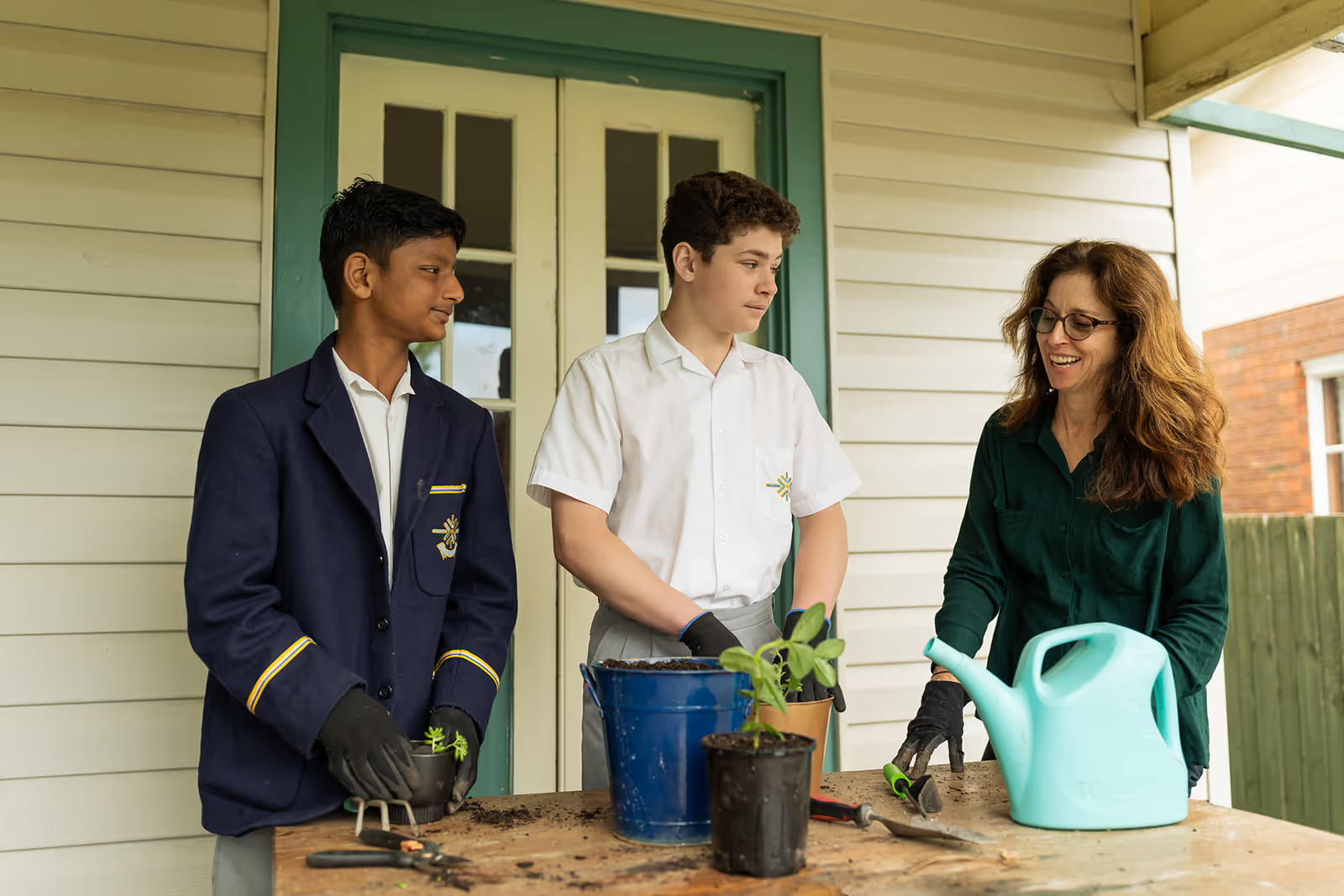
Food Technology offers students an experiential curriculum focused on nutrition, food preparation, and sustainability. As food choices impact both personal health and the environment, informed decision-making is key.

Students develop practical cooking skills while exploring the science of food and dietary balance. The curriculum promotes independence and equips students with essential life skills for making responsible food choices.

Multimedia Literacy

Multimedia Literacy equips students with skills to access, evaluate, and create information in a digital landscape. In a rapidly evolving world, information literacy is crucial for lifelong learning.

Students develop confidence in using various media platforms, including books, digital resources, and electronic texts. They learn to critically analyze information, enhancing their ability to research, synthesize knowledge, and engage with content effectively.

Read more

Design Technology

Design Technology empowers students with creative problem-solving skills. Through hands-on experiences with diverse materials, students learn the design process, from ideation to production and evaluation.

Safe work practices and an understanding of design principles are emphasized, allowing students to apply their knowledge to real-world challenges. Transferable skills prepare them for future learning and career opportunities.

Read more

Performing Arts

The Performing Arts curriculum develops students' confidence, self-expression, and collaboration skills. Through movement, speech, and dramatic exploration, students engage in creative processes that build trust and self-awareness.

Students are encouraged to think flexibly, explore diverse forms of artistic expression, and develop a deeper appreciation for performance. 

As their confidence grows, they become more innovative, resourceful, and articulate in their artistic endeavors.

Read more

Living Skills

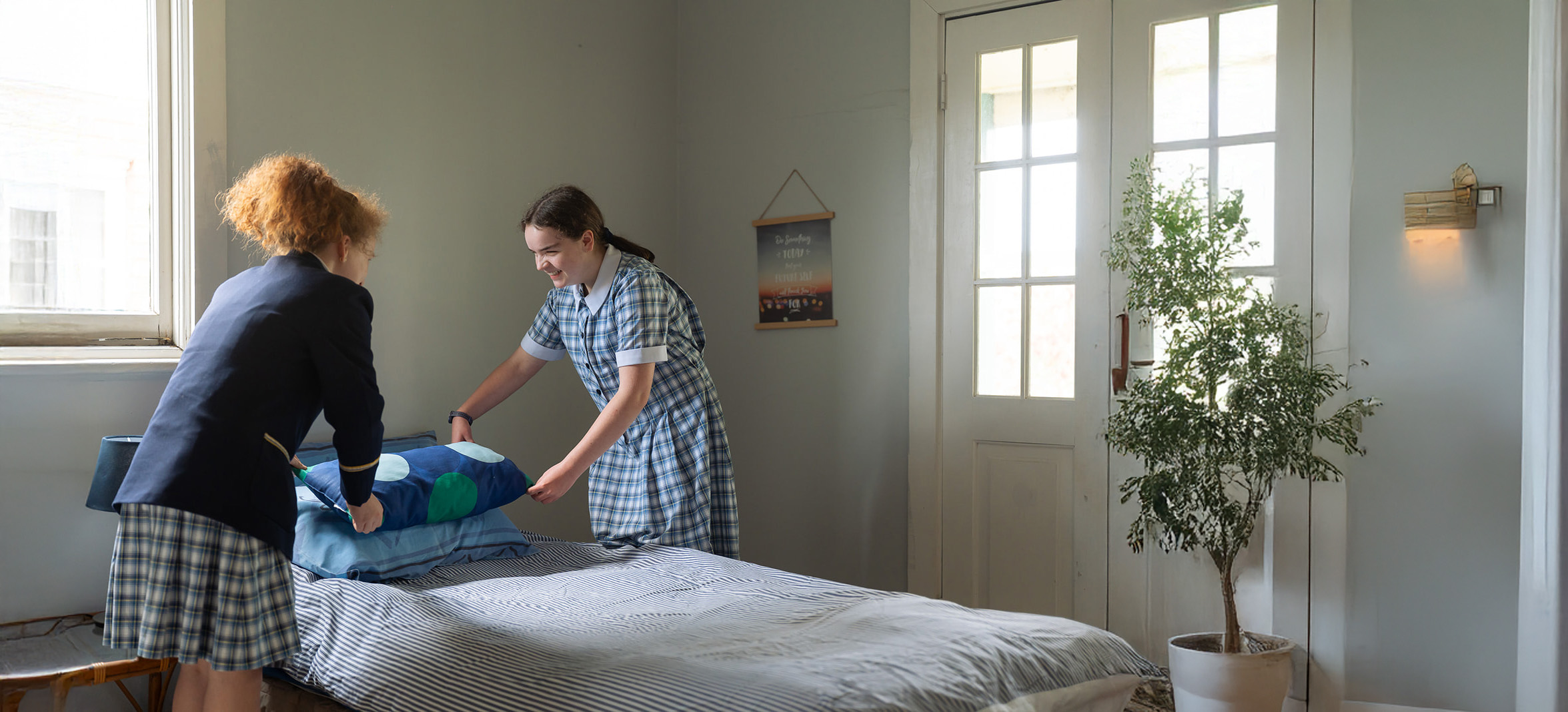
The Living Skills curriculum prepares students for independent living, household management, and community engagement. Drawing from multiple disciplines, including science, mathematics, English, and health, the program fosters real-world competency.

Our Living Skills House provides hands-on learning experiences in personal finance, home maintenance, and sustainable living. The curriculum encourages practical problem-solving and self-sufficiency.

art-tools Created with Sketch.

Visual Arts

Visual Arts play a crucial role in self-expression and communication. Students are encouraged to develop their creativity through various mediums, including painting, drawing, photography, and digital art.

By engaging in studio practice, students build technical skills and artistic confidence. The curriculum fosters a lifelong appreciation for the visual arts and encourages imaginative exploration.

Read more

Work-Related Skills

Work Education provides students with the knowledge and skills needed to navigate the world of work. Through exploration of education, training, and employment pathways, students gain an understanding of workplace expectations and responsibilities.

Students develop transferable skills, such as communication, teamwork, and problem-solving, preparing them for future careers. Real-world learning experiences, including work placements and industry engagement, equip students with the confidence to transition into the workforce successfully.

Read more

Rossbourne School’s curriculum is designed to support each student’s journey toward independence, resilience, and lifelong learning.

By fostering a dynamic, inclusive, and interconnected learning environment, we empower students to achieve their full potential.

Search our website